

Here are conditions/symptoms linked with endometriosis:
1. Gynaecological conditions
2. Bowel and gut symptoms
3. Bladder and urological symptoms
4. Chronic overlapping pain conditions
5. Migraine and headache
6. Mental health impact
7. Autoimmune and inflammatory conditions
8. Hormonal and metabolic overlap
9. Fertility-related struggles
10. Nerve and pain processing changes
11. Insomnia and sleep problems
12. Anemia and iron deficiency
Because we deserve to understand what is happening in our body’s without being dismissed you may speak about pelvic pain at your next appointment bowel symptoms, bladder pressure and fatigue a whole combination.
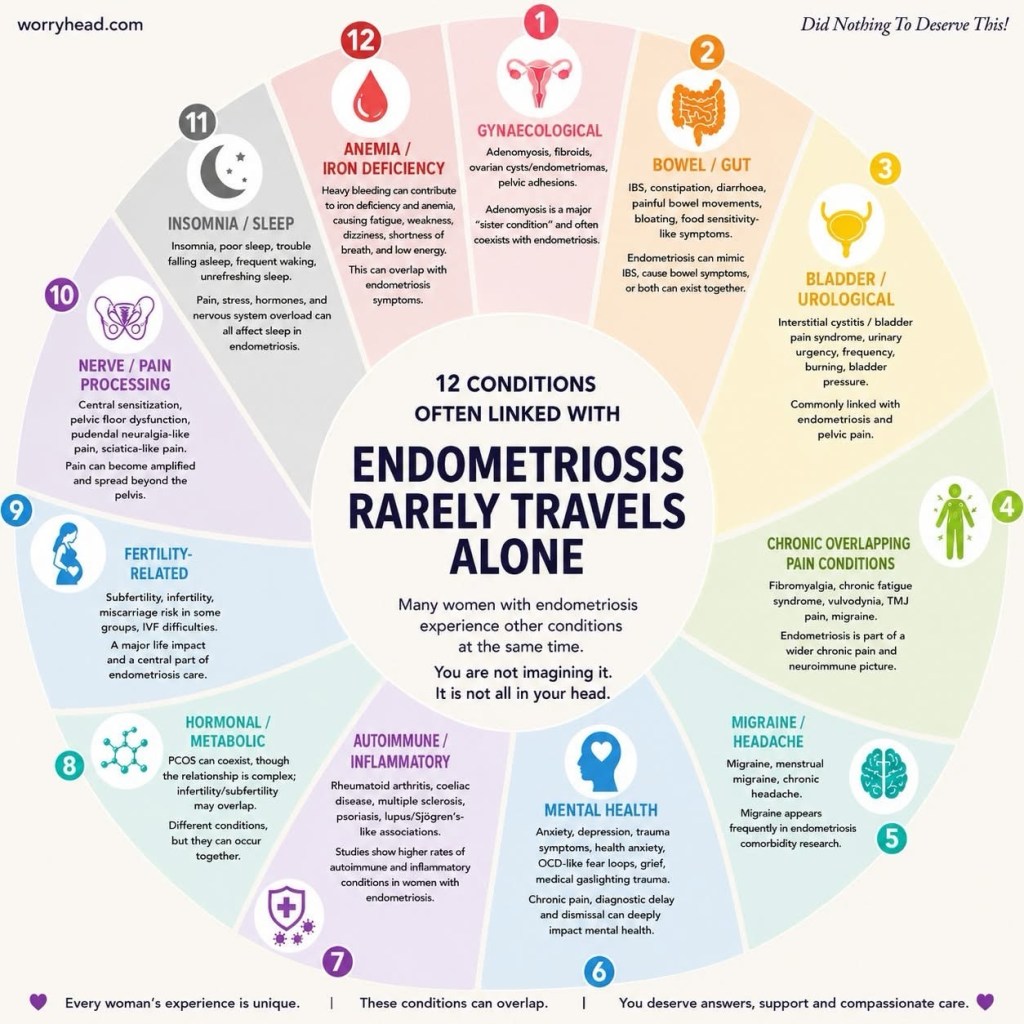
That does not mean you are “too much.” It may mean your body shows a bigger pattern lets unravel these
Gynaecological conditions
Endometriosis can overlap with adenomyosis, fibroids, ovarian cysts, endometriomas, adhesions, pelvic floor dysfunction, and heavy bleeding. You may notice pulling, stabbing, pressure, clotting, or pain that is not limited to your period. One small thing you can try today is tracking bleeding, clots, pelvic pressure, fatigue, and pain together. Patterns can help you explain symptoms more clearly.
Bowel and gut symptoms
Endometriosis can affect the bowel, sit near it, irritate surrounding tissue, or make your gut more sensitive. You may notice bloating, constipation, diarrhoea, nausea, painful bowel movements, or IBS-like symptoms. If your gut gets worse before or during your period, write that down. Track when it happens, what it feels like, and whether pain comes before or after the change.
Bladder and urological symptoms
You may deal with urgency, frequency, burning, bladder pressure, pain when your bladder fills, or feeling like you need to pee again even after going. Sometimes this overlaps with bladder pain syndrome, pelvic floor tension, or endometriosis near the bladder. New or severe symptoms should be checked, but if tests are clear and pain continues, you can ask, “Could this be connected to my pelvic pain?”
Chronic overlapping pain conditions
Endometriosis can sit alongside fibromyalgia, chronic fatigue syndrome, vulvodynia, TMJ pain, and widespread body pain. I see this closely with my wife, and I know how exhausting it is when pain refuses to stay in one place. This does not mean your pain is imaginary. It can mean your nervous system has become more sensitive. Here is what can help: pacing, fewer boom-and-bust days, and support that sees your whole body.
Migraine and headache
Migraine is not simply a bad headache. You may notice nausea, light sensitivity, sound sensitivity, dizziness, neck pain, aura, or a drained feeling afterwards. Hormonal shifts, poor sleep, pain, inflammation, stress, and medication changes can all play a part. Try tracking migraines with your cycle, sleep, pain flares, hydration, and stress. You are collecting clues, not blaming yourself.
Mental health impact
Anxiety, low mood, grief, health anxiety, fear loops, and medical gaslighting trauma can come from living with pain and not being believed. This does not mean you are weak. It means you have been carrying a lot. You may notice you are more irritable, tearful, numb, tense, or overwhelmed. Support may look like therapy, better pain care, written appointment questions, boundaries, or one safe person who believes you.
Autoimmune and inflammatory conditions
Some research suggests higher rates of certain autoimmune and inflammatory conditions with endometriosis. This may include coeliac disease, rheumatoid arthritis, psoriasis, lupus-like symptoms, Sjögren’s-like symptoms, and others. This does not mean you automatically have them. But if you have joint pain, rashes, swelling, mouth ulcers, severe fatigue, digestive symptoms, or symptoms that keep returning, do not dismiss yourself.
Hormonal and metabolic overlap
PCOS and endometriosis are different conditions, but they can coexist. You may notice irregular cycles, acne, hair changes, cravings, blood sugar crashes, weight changes, fatigue, or fertility concerns. Hormonal and metabolic symptoms are not a character flaw. You are not lazy. You are not failing. Food, movement, sleep, medication, and stress support can matter, but shame is not treatment.
Fertility-related struggles
Endometriosis can affect fertility for some, while others conceive without difficulty. If fertility is part of your story, you may be carrying grief, jealousy, guilt, fear, or pressure nobody sees. You are allowed to want answers. You are allowed to feel tired of being told to “just relax.” You are allowed to ask about options, timelines, and emotional support. Your worth is not measured by pregnancy, fertility, motherhood, or anyone else’s expectations.
Nerve and pain processing changes
Endometriosis pain can involve nerves, pelvic floor tension, central sensitisation, sciatica-like pain, hip pain, back pain, leg pain, and burning, shooting, electric, or stabbing sensations. What you may not realise is that pain can spread when the nervous system learns danger signals. This is not “all in your head.” It means your pain system may need a fuller care plan.
Insomnia and sleep problems
Pain can steal sleep, but poor sleep can also make pain feel louder. You may struggle to fall asleep, wake often, wake from pain, feel wired but exhausted, or sleep for hours and still feel unrefreshed. One small thing you can try today is making a flare-night plan before you need it: water nearby, heat or cold ready, comfortable clothes, medication instructions clear, and a note that says, “I do not have to solve my whole life at 2am.”
Anemia and iron deficiency
Heavy bleeding can contribute to iron deficiency and anemia. You may notice crushing fatigue, weakness, dizziness, breathlessness, palpitations, headaches, restless legs, feeling cold, or energy that disappears. These symptoms can be mistaken for “just endo fatigue.” If your periods are heavy, long, clotty, or draining, ask a qualified health professional whether checking ferritin and a full blood count is appropriate.
As you probably already know from your own experience, endometriosis is not only about painful periods. It can touch your bowel, bladder, sleep, energy, mind, nerves, hormones, pain system and that affects the relationship with your body.
That is why you may feel like you are constantly explaining yourself. That is why one normal test does not automatically explain everything.
That is why your patterns matter.
If symptoms are persistent, severe, new, or worrying, please speak with a trusted health professional. You deserve care that looks at the whole picture.
Save this for the next time you need a reminder that the overlap is real.
Share this with a woman who needs to hear that her symptoms are not a singular symptom.
Endometriosis needs validation and all the cross over symptoms and symptoms surrounding this chronic condition.
I hope this helps another Queen out there trying to find the words
Cassie x

